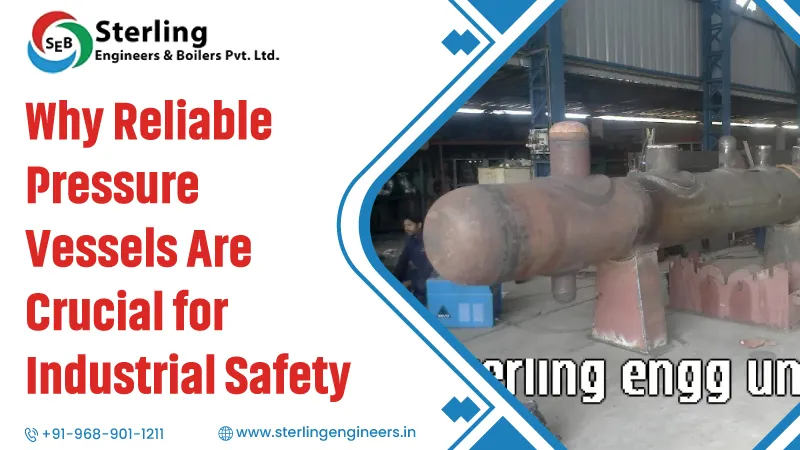
Industrial operations across sectors such as chemicals, power generation, pharmaceuticals, food processing, and petrochemicals rely on robust equipment to function smoothly. Among the core pieces of infrastructure in these environments are pressure vessels — heavy-duty containers Built to store liquids or gases when the pressure inside is much higher or lower than the outside. The structural integrity of these vessels directly influences workplace safety, operational efficiency, regulatory compliance, and cost control. Choosing components from a trusted Pressure Vessel Manufacturer is not just a technical requirement; it is a strategic decision that impacts industrial safety, performance, and long-term success. Sterling Engineers & Boilers Pvt. Ltd. is a leading company in delivering high-quality pressure vessels tailored to industrial needs, combining engineering excellence with strict safety compliance.
What Are Pressure Vessels and Why Do They Matter?
A pressure vessel is a container capable of holding liquids or gases at a pressure that is substantially higher or lower than atmospheric pressure. These vessels are central to many processes within industrial applications:
- Storage of compressed gases
- Reaction vessels in chemical processing
- Steam generation for power and manufacturing
- Safety buffers for compressed air systems
- Feedwater storage in boiler systems
Because pressure vessels operate under stressful conditions — high temperatures, varying loads, and corrosive substances — their failure can lead to catastrophic results, including fires, explosions, toxic releases, and structural damage. Therefore, quality and reliability from a certified Pressure Vessel Manufacturer are critical for ensuring workplace safety, protecting personnel, and securing assets.
How Pressure Vessel Failure Impacts Industrial Safety
The risks associated with poor-quality pressure vessels are significant. Without the right design, materials, and fabrication practices, a vessel may succumb to:
- Material Fatigue and Rupture: Repeated pressurization and depressurization cycles can weaken vessel walls over time. Inferior materials or substandard welding can cause cracks or ruptures, leading to dangerous leaks or explosions.
- Corrosion and Chemical Damage: Pressure vessels often hold corrosive substances or operate in harsh environments. Vessels that are not fabricated from corrosion-resistant alloys or treated surfaces can deteriorate quickly, compromising safety and performance.
- Pressure Overload: Incorrect design or lack of safety valves can allow pressure to exceed safe limits. This can cause sudden failure or violent bursts that endanger workers and infrastructure.
- Environmental and Regulatory Risk: Inadequately designed or manufactured pressure vessels may violate industry safety standards, resulting in legal liabilities and costly shutdowns.
Design Principles for Safe Pressure Vessels
Designing a reliable pressure vessel is a complex engineering task that must account for multiple variables:
- Material Selection: Materials must withstand the specific pressures, temperatures, and chemical exposure expected in service. Steel alloys, stainless steel, and other engineered metals are selected based on tensile strength, ductility, and corrosion resistance.
- Stress Analysis: Advanced engineering tools analyze stress distribution across vessel walls, supports, and connections. Finite Element Analysis (FEA) helps identify weak points and optimize design.
- Safety Factors: Design standards require safety margins that compensate for unexpected loads, temperature variations, and material inconsistencies. These factors set acceptable limits to prevent failure.
- Seam Integrity and Welding Standards: Weld seams are often the most vulnerable parts of a pressure vessel. Quality manufacturing uses qualified welding procedures and inspectors to guarantee strength.
- Testing and Validation: Pressure vessels undergo hydrostatic tests, nondestructive examinations, and other evaluations to validate performance under stress.
Sterling Engineers & Boilers Pvt. Ltd., a trusted Pressure Vessel Manufacturer, applies these design principles using advanced engineering and quality assurance processes to deliver safe, high-performance vessels.
Components of Pressure Vessels That Matter Most
Different parts of a pressure vessel play unique roles in overall safety:
- Shell: The cylindrical or spherical body that contains the process fluid. Its thickness and material determine the vessel’s pressure rating.
- Heads (End Caps): Heads can be hemispherical, elliptical, or torispherical. Their design influences how pressure distributes through the vessel.
- Nozzles and Manways: These are access points for fluid entry, exit, inspection, and maintenance. Well-designed nozzles align with process requirements without weakening the structure.
- Supports and Saddles: Structural support keeps the vessel stable under load. Design standards prevent undue stress on the shell during operation.
- Safety Valves and Fittings: Safety valves relieve excess pressure, while gauges and sensors monitor conditions. High-quality parts from a certified Pressure Vessel Manufacturer make these components reliable and responsive.
Applications of Pressure Vessels Across Industries
Pressure vessels serve as foundational equipment in many sectors:
- Power Generation: Boilers and steam drums in power plants require vessels capable of handling extreme pressure and heat. Pressure vessels in these environments must deliver consistent reliability for uninterrupted power production.
- Chemical Processing: Reactors, separators, and storage tanks in chemical plants operate under corrosive conditions and high pressure. Quality vessels maintain structural integrity under such intense environments.
- Oil & Gas: Pressure vessels used in pipelines, storage units, and refineries face fluctuating pressures and temperatures. Reliable vessels protect infrastructure and help meet strict safety regulations.
- Pharmaceuticals: Highly specialized reactors and sterilization units in pharmaceutical manufacturing require vessels free from contamination and capable of handling precise pressure and temperature conditions.
- Food & Beverage: Pressure vessels in pasteurization, carbonation, and processing systems must maintain hygiene standards while supporting safe pressurized operations.
In each case, the need for a reputable Pressure Vessel Manufacturer cannot be overstated — quality parts reduce hazards and help industries maintain productivity.
Advantages of Choosing a Certified Pressure Vessel Manufacturer
Partnering with a reputable Pressure Vessel Manufacturer offers several critical advantages:
- Proven Engineering Expertise: Experienced manufacturers apply industry best practices, advanced tools, and continuous improvement processes to produce robust vessels.
- Quality Materials Selection: High-grade materials for vessel shells, heads, fittings, and internal components extend operational life and enhance safety.
- Custom Fabrication: Different industries and processes have unique requirements. A reliable manufacturer delivers customized pressure vessel solutions tailored to specific operational demands.
- On-Site Support and Technical Expertise: Manufacturers with deep technical knowledge assist during installation, operation, inspection, and maintenance planning.
- Long-Term Reliability: Durable vessels reduce downtime, cut maintenance costs, and deliver predictable performance over time.
Installation and Maintenance Best Practices
To maximize the safety and lifespan of pressure vessels, industries should adopt best practices:
- Professional Installation: Qualified engineers should assemble and install pressure vessels according to design specifications and safety codes, preventing misalignment or stress concentration.
- Routine Inspection: Visual inspections, pressure tests, and non-destructive evaluations help identify early signs of fatigue, corrosion, or wear.
- Maintenance Scheduling: Routine cleaning, component checks, and valve calibration contribute to steady performance and prevent unexpected failures.
- Operator Training: Educating staff on proper operation, emergency protocols, and safety measures reduces human error and enhances overall safety culture.
Sterling Engineers & Boilers Pvt. Ltd. provides support and resources to help clients maintain optimal pressure vessel performance.
Economic Value of Quality Pressure Vessels
While choosing premium pressure vessels may represent a higher upfront investment, the long-term economic benefits are significant:
- Fewer breakdowns and emergency repairs
- Lower maintenance and replacement costs
- Improved productivity and reduced downtime
- Enhanced process reliability and product quality
- Reduced insurance and compliance costs
Investing in a reliable Pressure Vessel Manufacturer like Sterling Engineers & Boilers Pvt. Ltd. delivers both safety and financial advantages.
Why Choose Us
Sterling Engineers & Boilers Pvt. Ltd. is a leading Pressure Vessel Manufacturer that combines deep engineering expertise with strict adherence to safety standards. The company has a proven track record of delivering high-quality pressure vessels tailored to the specific demands of various industries, including power generation, petrochemical, pharmaceutical, and food processing sectors. With precision design, advanced fabrication practices, and comprehensive testing protocols, Sterling Engineers & Boilers Pvt. Ltd. provides products that withstand extreme conditions while promoting operational safety and reliability. Clients benefit from customized solutions, technical support throughout installation and maintenance, and documentation that meets regulatory compliance needs. Choosing Sterling Engineers & Boilers Pvt. Ltd. means partnering with a company committed to excellence, durability, and industrial safety.
Conclusion
Reliable pressure vessels are the foundation of safe industrial operations across multiple sectors. Designed to withstand extreme conditions, these vessels help protect workers, support process integrity, and maintain compliance with strict safety protocols. Sterling Engineers & Boilers Pvt. Ltd., a trusted Pressure Vessel Manufacturer, delivers pressure vessels engineered for durability, performance, and long service life. Investing in quality pressure vessels reduces downtime, optimizes energy use, and minimizes the risk of hazardous failures. Organizations that prioritize safety and efficiency benefit from expert design, certified fabrication, and ongoing technical support.
For expert insights on Pressure Vessels contact at +91-968-901-1211 or email sterlingboiler@gmail.com
Key Takeaways
- Industrial Safety First – Using high-quality pressure vessels from a trusted Pressure Vessel Manufacturer significantly reduces the risk of accidents, protecting personnel and equipment.
- Operational Efficiency – Reliable pressure vessels maintain stable pressure and temperature, ensuring smooth and uninterrupted industrial processes.
- Regulatory Compliance – Certified vessels comply with industry safety standards such as ASME and ISO, avoiding legal complications and promoting workplace safety.
- Cost-Effectiveness – Durable and well-engineered pressure vessels minimize maintenance, repairs, and replacements, saving operational costs over time.
- Tailored Industrial Solutions – Customized vessels cater to specific industrial needs across chemical, pharmaceutical, power, and manufacturing sectors, enhancing performance and safety.